Why This Matters Now
Digital certificates are the trust fabric of modern IT; they authenticate services and devices, encrypt data in transit, and keep integrations running across cloud, on-prem, and mobile environments. As the web PKI moves to much shorter certificate lifetimes over the next few years, renewal frequency and operational pressure will rise sharply. The CA/Browser Forum has approved a phased reduction to a maximum public-TLS validity of 200 days in 2026, 100 days in 2027, and 47 days by March 2029. However, the impact begins well before the end date, as each step compresses renewal windows and increases the chance of missed expirations – which can cause outages, break authentication flows, or blind security tools long before organizations are fully prepared for the new cadence.
For organizations already managing hundreds or thousands of certificates across distributed estates, manual trackers and ad-hoc reminders are no longer sustainable. One missed renewal can trigger outages, break authentication flows, and blind critical security tools. Centralized, continuous certificate monitoring has become a foundational control for availability, security, and compliance across global enterprises.
What Certificates Do and What Happens When They Fail
Certificates function like digital passports: they verify identities (sites, services, applications, and devices) and enable encrypted communication. When they expire or are misconfigured, the effects can be immediate:
- Service and application outages
- Broken SSO or device-auth flows
- Loss of visibility into encrypted traffic for security inspection
- Failed device-management operations
- Audit and compliance findings
Two widely discussed incidents illustrate the stakes:
- A satellite internet outage was publicly attributed to an expired ground-station certificate, disrupting service until renewal and recovery completed.
- During the 2017 Equifax breach, a monitoring device stopped inspecting encrypted traffic because of an expired certificate, leaving attackers undetected for weeks.
As certificate inventories grow and lifetimes shrink, continuous, automated monitoring is essential.
The Challenge: Shorter TLS Lifetimes, Greater Complexity
The shift toward 200-, 100-, and 47-day TLS lifetimes reduces the exploit window for compromised keys and improves crypto agility, but it also multiplies renewal events and stretches teams across diverse environments (cloud, SaaS, mobile, VPN, and on-prem). Ownership is often fragmented, and shadow certificates or unmanaged endpoints create blind spots. Manual tracking methods don’t scale; enterprises need complete inventories, reliable alerts, and process automation that aren’t dependent on any single person or inbox.
How ISEC7 SPHERE Helps
ISEC7 SPHERE provides centralized, continuous visibility into certificate usage across the enterprise, consolidating data into a single authoritative view so teams know what certificates exist, where they are deployed, and when action is required.
Automated Discovery & Inventory
ISEC7 SPHERE continuously discovers certificates and collects key metadata (issuer, validity, key parameters, deployment context). This helps eliminate blind spots across web and application servers, cloud connectors, device-management platforms, and VPN gateways.
Expiration Alerts & Notifications
Configurable early-warning thresholds drive proactive renewals and can integrate with existing ITOM/SIEM/ticketing tools to ensure issues are addressed before users or services are affected.
Compliance & Audit Reporting
ISEC7 SPHERE maintains an audit-ready history of certificate states, renewals, and changes so you can demonstrate consistent lifecycle governance during audits (e.g., ISO/IEC 27001, SOC 2) and meet regional expectations (e.g., NIS2, GDPR accountability).
Misconfiguration & Policy Detection
The platform highlights unauthorized certificates, non-compliant CAs, weak crypto, or unexpected deployments, reducing policy drift and the risk of shadow IT.
Integration with Automated Renewal
Where supported, ISEC7 SPHERE integrates with automated issuance and deployment (e.g., ACME-based flows and API-driven toolchains) to shrink manual effort – especially important as 47-day cadences become the norm.
Use Case: Apple Device-Management Dependencies in Microsoft 365 Environments
For enterprises managing iOS and macOS, Apple Push Notification service (APNs) certificates are a hard dependency for MDM solutions such as Microsoft Intune (part of Microsoft 365). If an APNs certificate expires or is misconfigured, new device enrollment may stop and existing managed devices can lose the ability to receive policies, apps, or commands until the issue is resolved. These certificates expire annually and must be renewed, and missed renewals can require re-enrollment – a major operational disruption at scale.
Beyond APNs, modern Apple fleet management relies on other time-bound artifacts such as Automated Device Enrollment (ADE/DEP) tokens, Apps and Books (VPP) tokens, and integration/API credentials used to connect identity, compliance, and security workflows. Their expiry or revocation can be equally disruptive, causing blocked onboarding and failed app assignments.
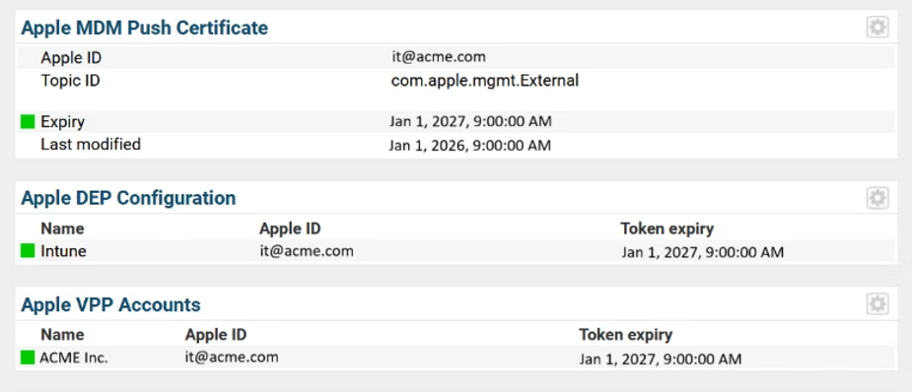
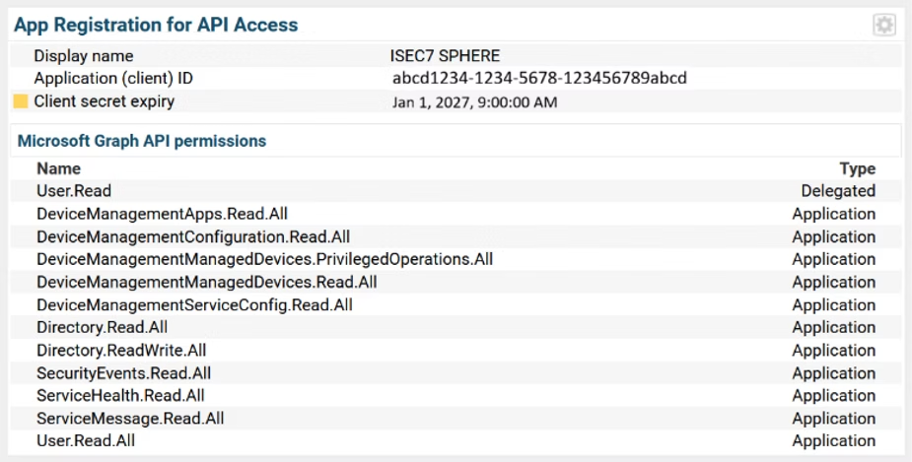
ISEC7 SPHERE continuously monitors these dependencies – including APNs certificates, ADE/DEP and VPP tokens, and relevant API credentials – as well as the Microsoft 365 API access used by ISEC7 SPHERE itself (app secrets, certificates, granted permissions). It tracks expiration timelines, validates configuration and permission status, and alerts administrators well in advance so teams can schedule renewals, verify access rights, and avoid unplanned service interruptions. In complex, multi-tenant, or regionally distributed Microsoft 365 environments, ISEC7 SPHERE provides a single, centralized view of all Apple-related certificates and tokens to prevent a single expiration from quietly breaking enrollment or app-delivery workflows.
Use Case: Adapting to 47-Day TLS Lifetimes
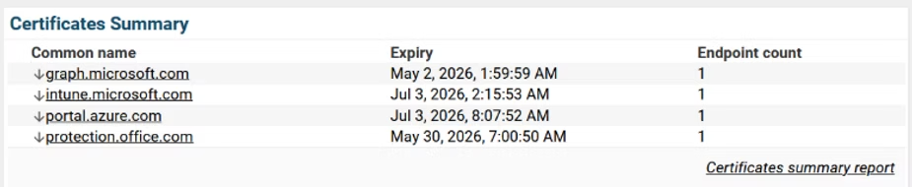
As TLS validity compresses to 47 days by March 2029, human-driven renewal processes won’t keep up. ISEC7 SPHERE identifies TLS certificates across public-facing services, internal apps, and infrastructure, tracks validity windows, highlights upcoming expirations, and surfaces context (issuing CA, affected endpoints). When connected to automated renewal systems, ISEC7 SPHERE enables a predictable, monitored cadence instead of firefighting outages.
Operational Benefits
- Fewer Outages: Centralized visibility and proactive alerts help teams avoid unexpected expirations.
- Better Security Posture: Detecting misconfigurations, unauthorized issuers, and weak settings reduces exposure.
- Demonstrable Governance: Reporting and history support audits and regional compliance expectations.
- Efficiency Through Automation: ISEC7 SPHERE minimizes manual work and supports frequent renewals required by the new TLS timelines.
Shortened certificate lifecycles are accelerating a broader operational shift from reactive fixes to continuous governance. With ISEC7 SPHERE, organizations can treat certificates as managed security assets, reduce configuration drift, and increase resilience – across web PKI and platform-specific dependencies like APNs, ADE/DEP, and VPP. In complex, fast-moving global environments, certificate monitoring is no longer optional. With ISEC7 SPHERE, it becomes practical, scalable, and predictable.